Table Of Content
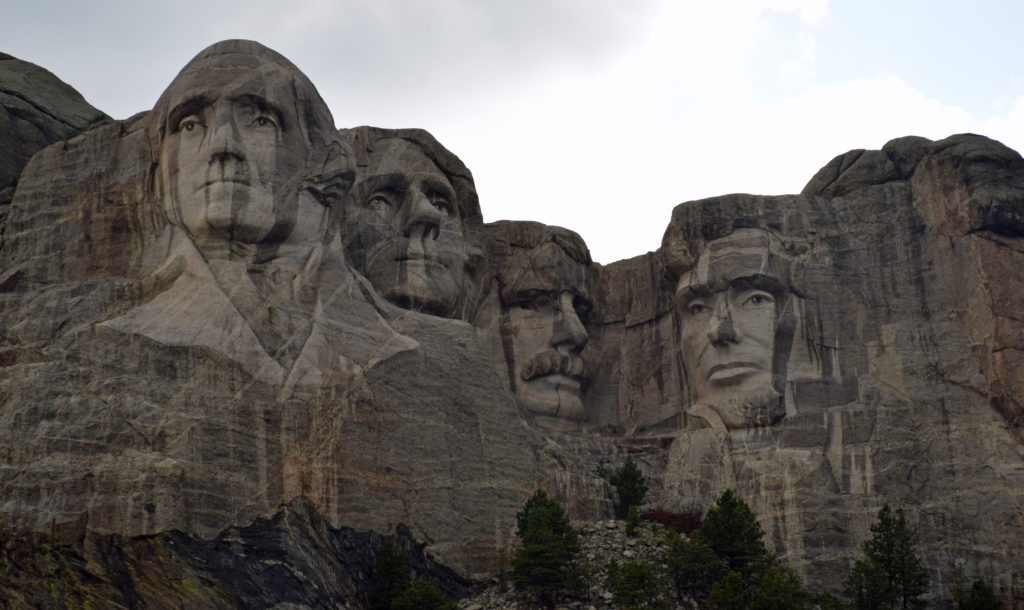
But the sculptor who was ultimately chosen for the project, Gutzon Borglum, settled on a concept to pay tribute to four former commanders in chief. Mount Rushmore’s duality—sacred indigenous ground, patriotic bucket-list destination—means it remains a protest site today. On July 4, 2020, more than a hundred demonstrators gathered at a Fourth of July rally held by President Donald Trump to protest the memorial and remind attendees that it was built on stolen land.
History & Culture
This video clip features film and photos shot during the 14-year extent of the carving work on Mount Rushmore. The film describes the process of accurately carving a scaled-up shape of Borglum's model into the mountain. One Borglum design envisioned the presidential figures as individual statues. Danish-born sculptor Gutzon Borglum's original vision of the monumental Mount Rushmore figures was very different from the carving as it stands today.
A controversial sculptor
In 1927, a white man from Connecticut traveled to the Black Hills to drill a hole in the ground near the tops of Mount Rushmore, where four white men’s faces would later be carved. An artist was commissioned to create a memorial for the Sioux nation to counterbalance the white faces of Rushmore. The Crazy Horse monument has elicited criticism and dissent from its opponents. The Black Hills were the location of a proposed massive monument proposed by Doane Robinson, South Dakota’s state historian, in 1923. George Washington, Thomas Jefferson, Abraham Lincoln, and Theodore Roosevelt were chosen to be part of the sculpture.
The Entablature Idea - Mount Rushmore National Memorial (U.S - National Park Service
The Entablature Idea - Mount Rushmore National Memorial (U.S.
Posted: Mon, 30 Jan 2023 08:00:00 GMT [source]
The heartbreaking, controversial history of Mount Rushmore
As the U.S. continues to reckon with the Confederate statues and other monuments to its racist past, some tribal leaders and their supporters have called for the removal of the memorial. Forces began campaigning to add faces to Mount Rushmore while the monument was still under construction. First Lady Eleanor Roosevelt supported an unsuccessful 1936 proposal to put women’s rights activist Susan B. Anthony on the rock. The idea that the memorial could somehow evolve would live on, with political partisans over the years suggesting adding John F. Kennedy, Ronald Reagan, and Franklin Delano Roosevelt.
Thomas Jefferson
A few hundred workers, most of whom were miners, sculptors, or rock climbers, used dynamite, jackhammers, and chisels to remove material from the mountain. A stairway was constructed to the top of the mountain, where ropes were fixed. Yet, for all its admirers, Mount Rushmore had, and continues to have, its critics. When Robinson first spoke in the 1920s of carving into the Black Hills, environmentalists were outraged. Why, they thought, did men have to mar the natural beauty of a mountain? Many local Lakota see Mount Rushmore as a desecration of their sacred homeland.
Thomas Jefferson, who nearly doubled the country’s size with his purchase of the Louisiana Territory, stood for its westward expansion. Theodore Roosevelt, who had overseen the construction of the Panama Canal, was a symbol of economic growth. And Abraham Lincoln was selected for having fought to preserve the nation in the Civil War. Initially, Calvin Coolidge was to write the history of the United States that would be carved on the Entablature, but he and Borglum disagreed on how the history should be worded. Calvin Coolidge died in 1933 before any definite wording was finalized.Gutzon Borglum teamed up with the Hearst newspapers in 1934 to sponsor an essay contest.
How Mount Rushmore stands in the face of volatile weather - Fox Weather
How Mount Rushmore stands in the face of volatile weather.
Posted: Tue, 04 Jul 2023 07:00:00 GMT [source]
He then went on to shoot the film’s violent final chase scene on a scaled replica so realistic that viewers believed it was filmed at Mount Rushmore. Department of the Interior cried foul, and ultimately asked Metro-Goldwyn-Mayer to remove the credit line at the end of the movie thanking them for their cooperation. An aerial view of Mount Rushmore taken in 1967 shows the four presidential faces, the surrounding Black Hills, and its jumbo parking lot. Both the parking lot and the parking garage which replaced it in the 1990s drew criticism for the clearing of land required to build them; the current $5 fee to park in the garage isn’t popular with tourists either. In the late 1800s, Euro-American settlers began pushing into the Black Hills, igniting a war with the indigenous population. The U.S. government signed the Treaty of Fort Laramie in 1868, giving the Lakota exclusive use of the Black Hills.
Gold was struck, and a rush of panhandlers began to illegally settle the area. The Great Sioux War erupted in 1876, and by 1877, an act of Congress forced the defeated Lakota to surrender their land. “Tourists soon get fed up on scenery unless it has something of special interest connected with it to make it impressive,” he said. He envisioned heroes of the American West—Red Cloud, Lewis and Clark, Buffalo Bill Cody, among others—carved into the granite “needles,” named for their pointy appearance, near Harney Peak, the state’s tallest mountain. In the years since its conception, Mount Rushmore has not been without its controversy — Snopes has previously covered its creator's racism, and proposals to add Barack Obama and Donald Trump to the monument.
What Do Native Americans Think Of Mt Rushmore?
In 1929, during the last days of his presidency, Coolidge signed legislation appropriating $250,000 in federal funds for the Rushmore project and creating the Mount Rushmore National Memorial Commission to oversee its completion. Boland was made the president of the commission’s executive committee, though Robinson (to his immense disappointment) was excluded. Mr. Robinson originally envisioned a sculpture memorializing figures of the American West, such as the explorers Lewis and Clark or the Oglala Lakota leader Red Cloud.
In the decades since, the memorial and its surroundings have served as a flash point for the treatment of Native Americans. For Lakota, Cheyenne, and Arapaho communities, the region was not only spiritually important, it was also where tribes gathered food and plants they used in building and medicine. In 1850, Texas willingly ceded the disputed Rio Grande region, thus ending the dramatic acquisition of the west. A young Nebraskan named William Andrew Burkett, triumphed in the college-age category.
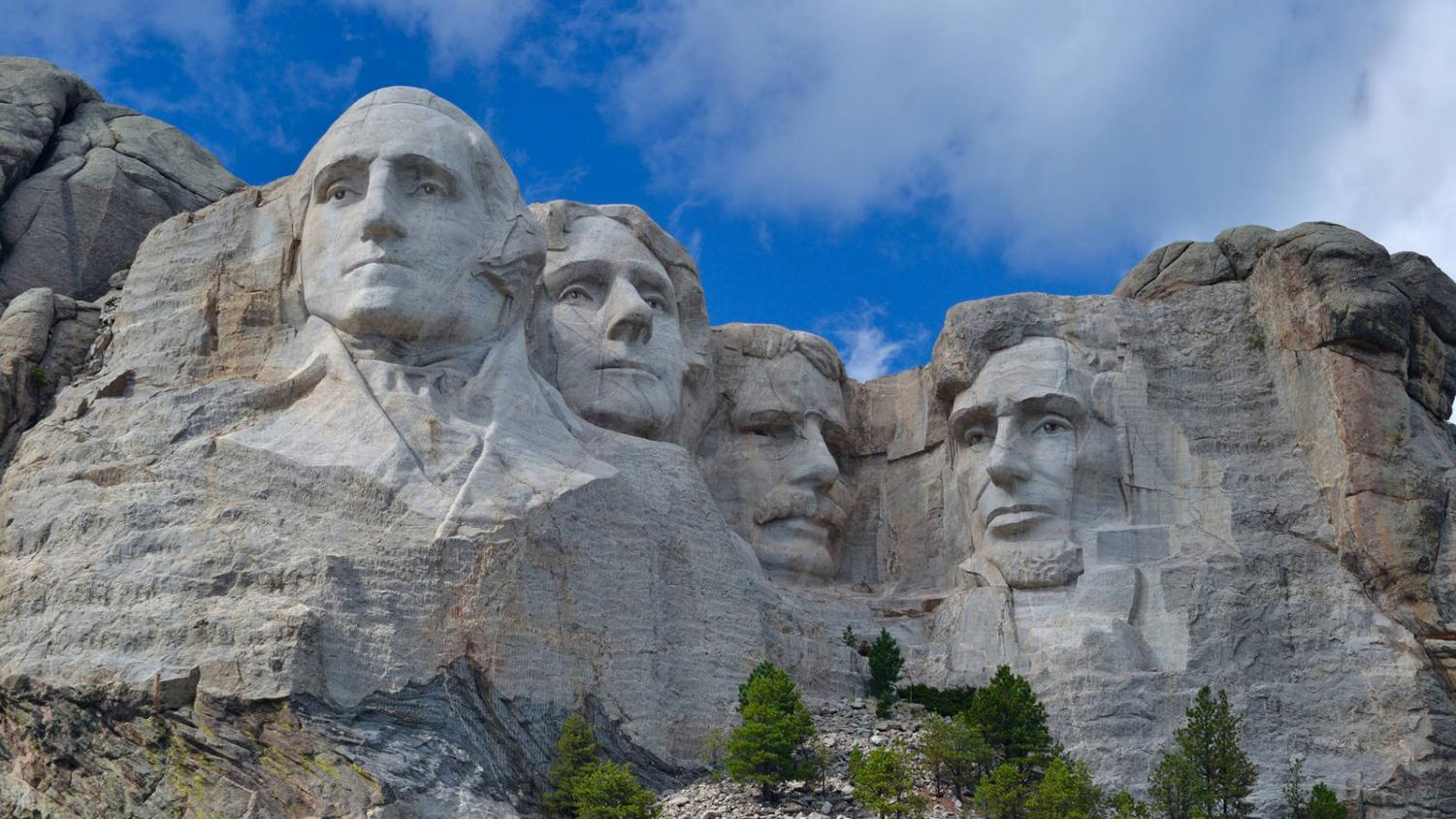
Within a decade, however, gold was discovered in the region and, in 1877, the U.S. broke the treaty and took over the land. Mount Rushmore pays patriotic tribute to four United States presidents—George Washington, Thomas Jefferson, Theodore Roosevelt, and Abraham Lincoln—with 60-foot-tall faces carved into a mountainside in the Black Hills of South Dakota. Built on sacred Native American land and sculpted by a man with ties to the Ku Klux Klan, Mount Rushmore National Memorial was fraught with controversy even before it was completed 79 years ago on October 31, 1941. Abraham Lincoln's head was the most challenging because of his beard, but his head was completed on the far right of the cliff. Lincoln's face was finally dedicated on September 17, 1937, which was the 150th anniversary of the signing of the Constitution of the United States in 1787.
For more than two decades, Ben Black Elk was known as the “Fifth Face” of Mount Rushmore. Doane Robinson, South Dakota’s historian, hoped to attract tourists to his state by 1920. Gutzon Borglum, a renowned artist, was hired to create colossal portraits of legendary Wild West heroes.


No comments:
Post a Comment